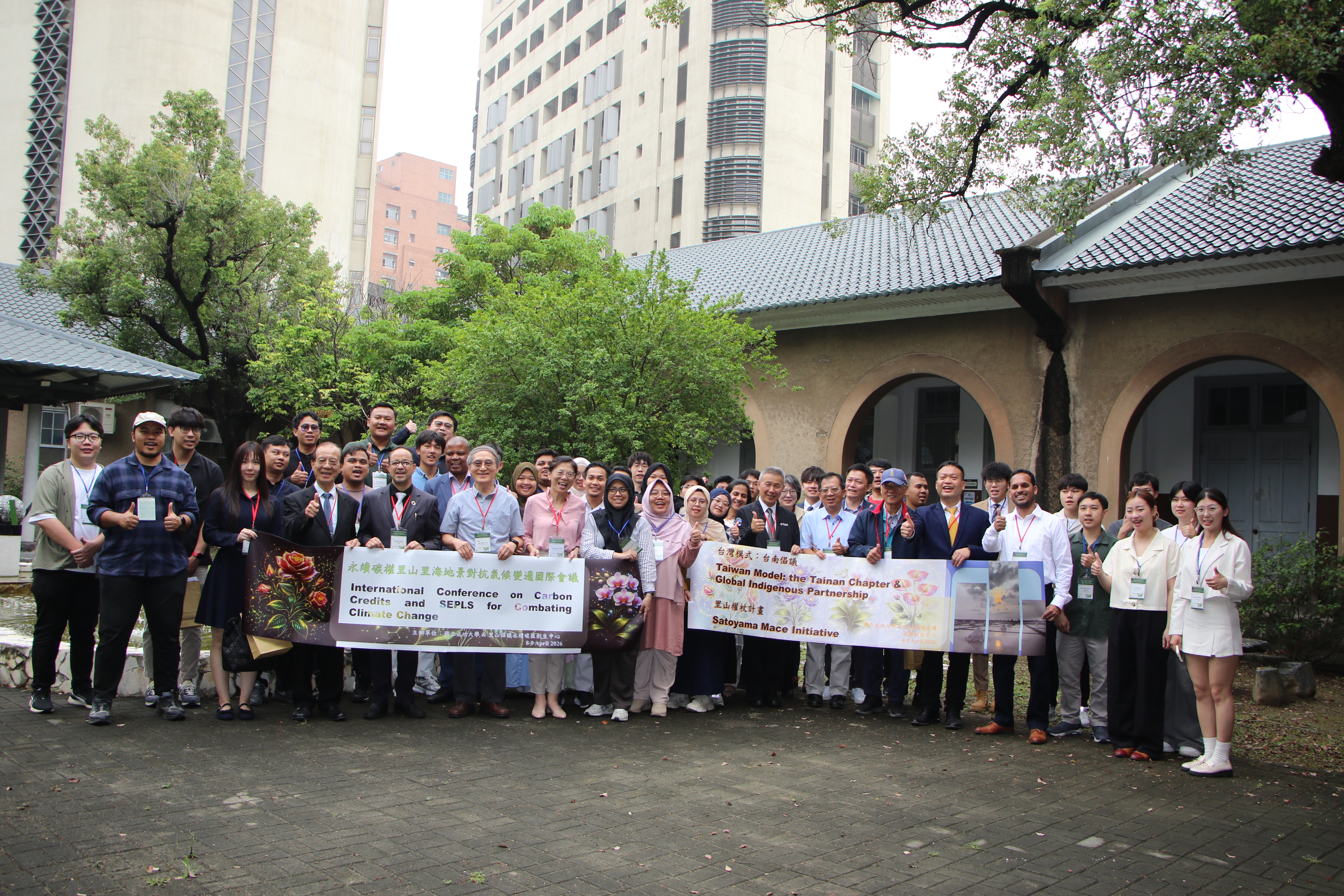
Indigenous-led SEPLS carbon model integrates MRV innovation, wetlands, and nature-based solutions to support NDC 3.0 and NAP implementation.
TAIWAN, April 27, 2026 /EINPresswire.com/ — The SEPLS Carbon Credit Regional Revitalization Center has joined the FAO Mountain Partnership collaborative network, advancing an Indigenous-led landscape-based carbon model that integrates socio-ecological production systems with global climate frameworks. The initiative demonstrates how vertical wetland systems, agroforestry landscapes, mangrove ecosystems, and rural mosaic land-use patterns can be mobilized for high-integrity carbon sequestration, biodiversity conservation, and climate adaptation. Through the integration of Monitoring, Reporting and Verification (MRV) technologies, including remote sensing and AI-assisted carbon accounting, the model strengthens the scientific credibility and scalability of nature-based solutions.
Aligned with the Kunming–Montreal Global Biodiversity Framework, the Paris Agreement, and emerging NDC 3.0 and National Adaptation Plan (NAP) frameworks, the initiative emphasizes Indigenous stewardship, equitable benefit-sharing, and landscape-level governance as core pillars of climate implementation.
The SEPLS Carbon Credit Regional Revitalization Center announces its formal participation in the FAO Mountain Partnership collaborative network, marking a significant step in linking Indigenous landscape governance with global carbon and biodiversity frameworks. The SEPLS (Socio-Ecological Production Landscapes and Seascapes) approach provides an integrated framework that connects ecosystem restoration, rural revitalization, and high-integrity carbon finance. The model is implemented across diverse landscape systems, including agroforestry zones, coastal mangrove ecosystems, mountain environments, and vertical wetland systems.
Indigenous-led climate implementation
A core feature of the initiative is the active role of Indigenous peoples and local communities in climate governance and implementation. The model supports community-led stewardship of landscapes while ensuring that carbon benefits are aligned with social equity, cultural continuity, and biodiversity conservation. Through collaboration with Indigenous partners under the Satoyama Mace Initiative: Indigenous Partnership Platform, the program contributes to the operationalization of climate strategies aligned with Nationally Determined Contributions (NDC 3.0) and National Adaptation Plans (NAP), particularly in ecosystem-based adaptation and nature-based mitigation systems.
MRV innovation and scientific integration
The SEPLS Carbon Credit Regional Revitalization Center integrates advanced Monitoring, Reporting and Verification (MRV) systems to ensure transparency and scientific rigor in carbon accounting. These systems combine Remote sensing and geospatial analysis, Field-based ecological monitoring, AI-assisted carbon estimation models, and ISO-aligned verification frameworks (ISO 14064 / 14065). This hybrid MRV architecture enhances data accuracy across complex landscapes, including wetlands, rice paddies, forest-agroforestry mosaics, and coastal blue carbon systems.
Vertical wetland and landscape-based carbon systems
The initiative highlights the role of vertical wetland systems in carbon and water regulation. These include riverine floodplains, rice paddy ecosystems, freshwater wetlands, and mangrove transition zones. A demonstration site in Liujia, Tainan, incorporates integrated wetland-agroforestry systems, including dawn redwood (Metasequoia) plantations and surrounding agricultural land, to evaluate carbon sequestration dynamics and hydrological carbon interactions. Coastal mangrove restoration areas further contribute to blue carbon accounting, expanding the scope of carbon sequestration beyond terrestrial systems.
Global framework alignment
The SEPLS model aligns with multiple international frameworks. By linking landscape-level action with global policy frameworks, the initiative provides a replicable model for integrating mitigation, adaptation, and biodiversity outcomes. The initiative aims to contribute to emerging climate finance mechanisms, including voluntary carbon markets, Article 6 cooperative approaches, and potential funding pathways. Through its participation in the FAO Mountain Partnership collaborative network, the SEPLS Carbon Credit Regional Revitalization Center seeks to strengthen international collaboration, knowledge exchange, and methodological development for nature-based climate solutions.
About the SEPLS Carbon Credit Regional Revitalization Center
The SEPLS Carbon Credit Regional Revitalization Center is an integrated platform that connects ecosystem-based land management with carbon finance systems. It supports the Satoyama Mace Initiative to indigenous peoples, farmers, and local communities in generating high-integrity carbon credits through landscape restoration, MRV innovation, and biodiversity co-benefit integration.
About Satoyama Mace Initiative
The Satoyama Mace Initiative: Indigenous Partnership Platform is a collaborative framework advancing Indigenous-led climate solutions across SEPLS landscapes. It focuses on integrating traditional ecological knowledge with modern climate science and finance mechanisms to support NDC and NAP implementation. The Satoyama Mace Initiative is a Taiwan-based international platform that advances integrated approaches to climate action by linking biodiversity conservation, carbon markets, and community-based governance. Rooted in the concept of socio-ecological production landscapes and seascapes (SEPLS), the initiative promotes high-integrity carbon systems that incorporate cultural values, Indigenous knowledge, and measurable climate outcomes. It aims to transform landscape stewardship into scalable mechanisms for both mitigation and adaptation, while ensuring equitable benefit-sharing through frameworks such as biocultural dividends.
About the Global Indigenous Partnership for Climate Action
The Global Indigenous Partnership for Climate Action is an international collaboration platform designed to empower Indigenous peoples and local communities in climate governance and carbon market participation. The partnership focuses on strengthening capacities in measurement, reporting, and verification (MRV), supporting Free, Prior, and Informed Consent (FPIC), and facilitating access to global climate finance mechanisms. By integrating Traditional Ecological Knowledge (TEK) with scientific methodologies, the platform seeks to position Indigenous-led solutions at the center of global climate strategies.
About the Tainan Chapter
The Tainan Chapter represents a localized implementation of the Taiwan Model, bringing together government agencies, academic institutions, community organizations, and industry partners to operationalize net-zero transition strategies. It serves as a regional demonstration hub for integrating natural carbon sinks, cultural heritage, and sustainable industries. Through pilot projects across diverse landscapes—from coastal wetlands to mountainous ecosystems—the Tainan Chapter showcases how place-based governance and community participation can deliver measurable climate, ecological, and socio-economic benefits.
Shu-Mei Wang
SEPLS Carbon Credit Regional Revitalization Center
email us here
Visit us on social media:
LinkedIn
Other
Legal Disclaimer:
EIN Presswire provides this news content “as is” without warranty of any kind. We do not accept any responsibility or liability
for the accuracy, content, images, videos, licenses, completeness, legality, or reliability of the information contained in this
article. If you have any complaints or copyright issues related to this article, kindly contact the author above.

Media gallery